Bitcoin Rainbow Chart predicts BTC price for March 31, 2026

Bitcoin Rainbow Chart predicts BTC price for March 31, 2026

Analyzing Bitcoin's Position on the Rainbow Chart


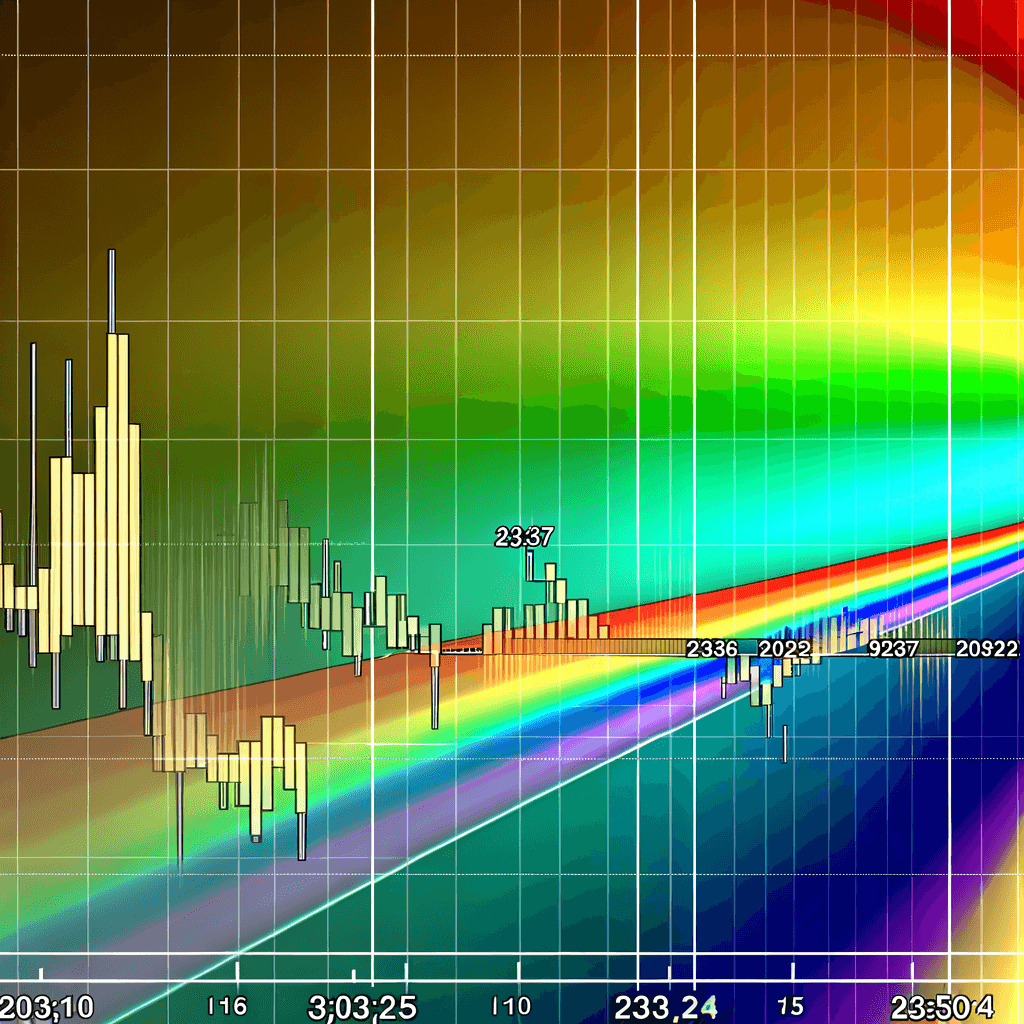
As Bitcoin (BTC) continues to hold below the $70,000 level, investors and analysts are keenly observing its performance through various analytical tools, including the widely popular Bitcoin Rainbow Chart. This chart provides a logarithmic representation of historical price behaviors, showcasing different phases that Bitcoin has traversed, ranging from periods of extreme undervaluation to euphoria-driven speculative bubbles. Currently, Bitcoin is trading at approximately $67,535, showing a minor dip of 0.3% in the last 24 hours but reflecting a weekly gain of around 1.5%. These fluctuations are driving interest in tools like the Rainbow Chart to provide insights into potential market directions.


Understanding the Rainbow Chart's Logarithmic Bands


The Bitcoin Rainbow Chart is constructed using logarithmic regression bands. This mathematical approach offers a nuanced view of Bitcoin's historical price behaviors, segmented into various valuation categories. At one end of the spectrum, the "Basically a Fire Sale" band marks the range from $42,995.69 to $56,134.77. Historically, this band signifies periods when Bitcoin is perceived as substantially undervalued, offering significant buying opportunities for investors looking at its long-term potential.


Current Market Position: "BUY!" Zone


With Bitcoin currently trading around $67,500, it resides in the "BUY!" zone. This band stretches from $56,134.77 to $75,631.88 in the March 31 projection. Within this zone, Bitcoin is suggested to be fundamentally inexpensive, presenting an attractive proposition for accumulation by long-term investors. The logic is that, at these levels, Bitcoin is still trading below its long-term trend value, making it a favorable point for entry, especially for those who believe in its long-term growth trajectory.


Progressing Through the Bands: A Look at Future Zones


Ascending through the Rainbow Chart, we encounter the "Accumulate" band ($75,631.88 to $97,594.05), which indicates continued undervaluation but heralds a market recovery. Next is the "Still Cheap" band ($97,594.05 to $125,972.37), where Bitcoin approaches its long-term fair value, urging investors to maintain positions ("HODL!"), ranging from $125,972.37 to $164,842.17. These zones suggest stability and alignment with anticipated growth trends rather than immediate speculative movements.


Entering Overheated Territory


Beyond these bands, the chart enters speculative territory, highlighted by the "Is this a bubble?" ($164,842.17 to $209,828.69) and "FOMO intensifies" ($209,828.69 to $268,676.59) zones. These bands reflect heightened speculative activities and retail interest fueled by the fear of missing out (FOMO). As Bitcoin continues upward, the "Sell. Seriously, SELL!" band ($268,676.50 to $349,493.74) suggests historically high valuations where profit-taking usually prevails. The apex of this trajectory, the "Maximum Bubble Territory" ($349,493.74 to $469,687.80), marks excessive exuberance and caution.


Forecasting Bitcoin's Fair-Value Region


By March 31, the Rainbow Chart projects that Bitcoin's fair-value region would ideally align with the "Still Cheap" to "HODL!" bands, ranging from approximately $97,594 to $164,842. Trading within these regions would reflect a more balanced position relative to its long-term growth path rather than the discounted levels observed in the lower bands. While short-term predictions remain speculative, the Rainbow Chart provides a valuable framework for understanding Bitcoin’s cyclical nature and its relative position within market dynamics.


Conclusion: Navigating Through Market Cycles


In conclusion, while the Bitcoin Rainbow Chart is not designed for precise short-term forecasting, it serves as an insightful tool for assessing Bitcoin's overall market cycle. As Bitcoin remains in the "BUY!" zone, investors are encouraged to consider its historical patterns and future growth potential. By visualizing these logarithmic regression bands, traders and investors can make more informed decisions regarding entry and exit points based on long-term trends rather than short-lived market impulses.


Latest news