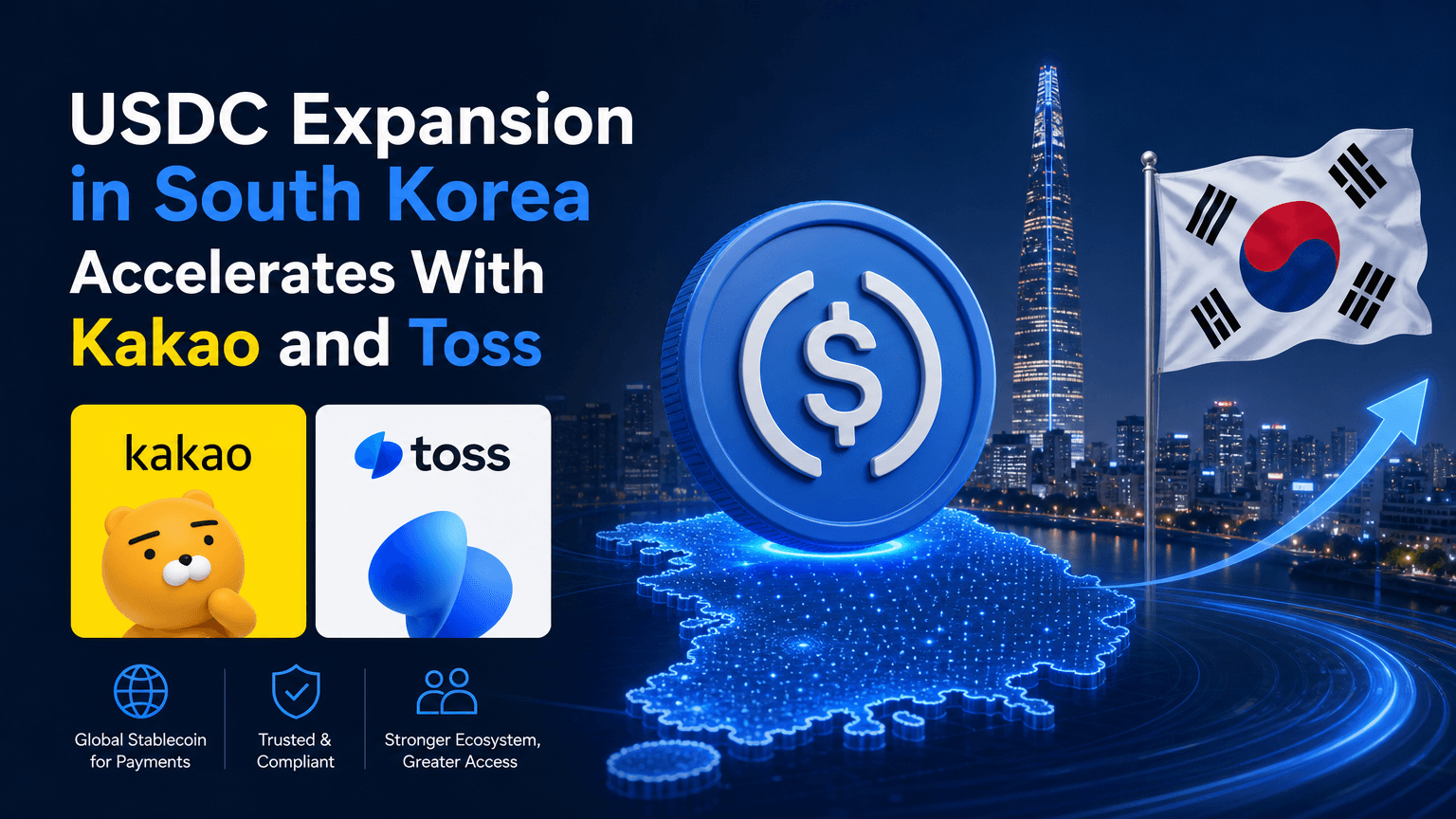
USDC Expansion in South Korea Accelerates With Kakao and Toss

USDC Expansion in South Korea Accelerates With Kakao and Toss

USDC Expansion in South Korea with Kakao and Toss

Circle, the prominent issuer of the USDC stablecoin, is widening its footprint in South Korea through strategic agreements with two major players in the financial market, Kakao Group and Toss. These memorandums of understanding, finalized on July 23, aim to integrate blockchain payment infrastructure and regulated stablecoin services into South Korea’s financial ecosystem. While still in the exploratory phase, these initiatives offer Circle a promising entry into a vast network of wallet, banking, and payment systems in the region.


Kakao's Exploration of Stablecoin and Digital Asset Integration

Kakao Group, which operates multiple consumer platforms including Kakao, Kakao Pay, and KakaoBank, will evaluate integrating Circle’s blockchain technology into their services. This exploration includes analyzing payment systems, merchant settlement options, remittances, and the potential for digital asset links. With over 40 million registered users on Kakao Pay, the collaboration provides Circle with access to one of the largest digital wallet networks in South Korea, potentially bridging traditional finance with blockchain-based solutions.


Potential Use Cases and Regulatory Considerations

The possible use cases for USDC within the Kakao ecosystem include merchant settlements and remittance services via stablecoin payments, and perhaps future connections between the Korean won-denominated digital assets and USDC within global settlement systems. It’s worth noting that Circle currently has no immediate plans to issue a stablecoin pegged to the Korean won. Instead, USDC aims to serve as an intermediary for international transactions and financial services, enhancing global liquidity and settlement for Korean businesses.


Toss's Examination of USDC Wallet Features and Programmable Payments

Similarly, Toss and Toss Bank, known for their comprehensive suite of digital finance services, are exploring various consumer banking functionalities involving USDC. Their focus includes potential applications for USDC wallets, programmable payments—which facilitate transactions based on specific conditions—biometric authentication systems, and international transfer mechanisms. The exploration also extends to studying links between USDC and traditional banking networks.


Compliance and the Regulatory Landscape

As part of their exploration, Toss and Circle are scrutinizing compliance aspects, particularly concerning anti-money laundering protocols, risk management, and cybersecurity measures. These considerations align with the evolving regulatory environment in South Korea, where stablecoin and digital asset guidelines are actively being developed.


Broader Implications of Circle’s Expansion

This strategic push into South Korea is part of Circle’s broader ambition to fortify its presence within the nation’s burgeoning cryptocurrency market. Earlier this year, Circle signed agreements with top South Korean exchanges Upbit and Bithumb to further USDC adoption and technological collaboration. These partnerships are pivotal, as Upbit and Bithumb collectively handle the bulk of daily cryptocurrency trading volume in the country.


Next Steps for Circle’s USDC Initiative in South Korea

Despite these promising developments, the memorandums with Kakao and Toss are not definitive guarantees of service deployment. The realization of live operations hinges critically on technical feasibility, product design alignments, and securing regulatory approvals. As of July 23, Circle reported a supply of $74.4 billion USDC, underscoring the scale and potential impact of their stablecoin within global financial markets.


Latest news