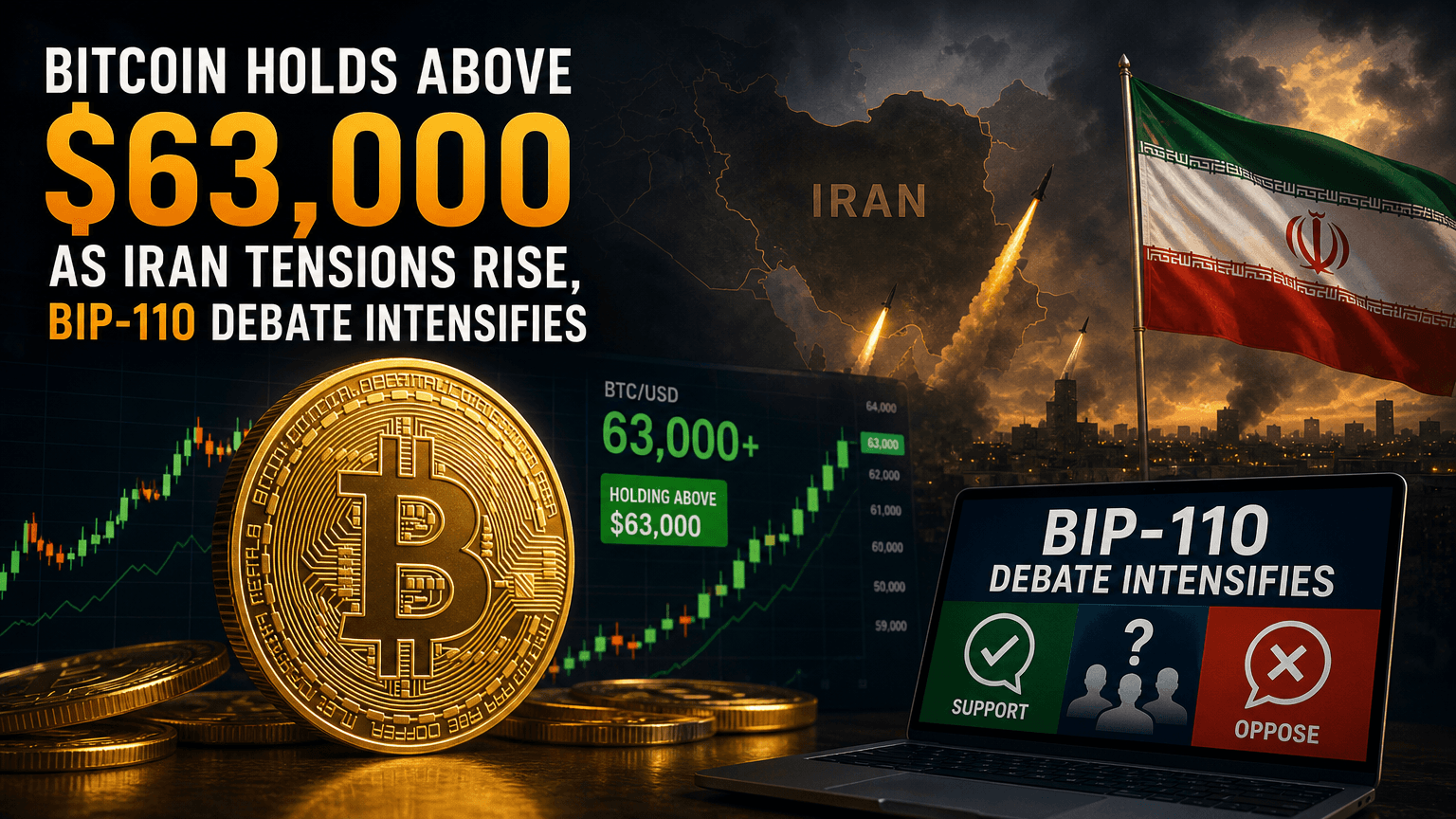
Bitcoin holds above $63,000 as Iran tensions rise, BIP-110 debate intensifies

Bitcoin holds above $63,000 as Iran tensions rise, BIP-110 debate intensifies

Bitcoin's Resilient Performance Amid Global Geopolitical Tensions

Investing.com -- Over the past weekend, Bitcoin demonstrated remarkable resilience by trading above the $63,000 threshold. This performance came amid rising geopolitical tensions, as the U.S. executed another series of military strikes on Iranian positions, leading Tehran to threaten the closure of the crucial Strait of Hormuz once again.


As of 04:56 ET (08:56 GMT), Bitcoin was trading down slightly by 0.42%, at $63,984.1. Despite these tensions to crucial global energy conduits, Bitcoin's trajectory remained largely stable. Historically, geopolitical conflicts in the Middle East often lead to turbulence across markets, yet this time, the cryptocurrency segment seemed unfazed.


Cryptocurrency Markets in the Face of Fluctuating Geopolitical Dynamics

Traditionally, financial markets tend to react sharply to geopolitical uncertainties, especially those involving energy supply disruptions. However, with traditional markets closed over the weekend, Bitcoin stood as one of the few liquid assets capable of reacting instantaneously to these developments.


Traders and investors alike are now scrutinizing the forthcoming opening of the oil market to gauge whether the recent tensions between the U.S. and Iran will manifest in crude price fluctuations. If non-crypto markets respond predictably, Bitcoin could serve as an early indicator of market sentiment under such global crises.


Legislative Momentum in the U.S. Digital Asset Space

On the regulatory front, attention is drawn towards Washington D.C., where U.S. Senator Cynthia Lummis has galvanized momentum for the passage of the CLARITY Act. This legislative proposal aims to delineate roles between the Securities and Exchange Commission (SEC) and the Commodities Futures Trading Commission (CFTC) in overseeing digital assets.


As the bill successfully passed through the House, it faces renewed scrutiny in the Senate. Senator Lummis asserts that the current political climate is ripe for establishing a robust regulatory framework that could govern digital assets until at least the end of the decade.


The Internal Debate Among Bitcoin Developers

Beyond regulatory contexts, the Bitcoin developer community revisits the controversial discussion around BIP-110. This proposal posits temporal restrictions on non-financial data being stored within the blockchain, a bid to manage data perceived as "spam."


Despite its early August deadline, BIP-110 has garnered negligible backing from major mining pools, with support levels persistently under 1%. Key figures like Michael Saylor and Adam Back have voiced concerns, arguing that altering Bitcoin’s consensus rules might inadvertently introduce substantial long-term risks.


Given the current sentiment within developer circles, BIP-110 appears unlikely to accrue sufficient backing for activation.


Public-Private Partnerships: Impact on the Crypto Ecosystem

In another part of the world, Singapore's proactive measures underscore the growing synergy between regulatory bodies and the cryptocurrency sector. In collaboration with police forces and crypto exchanges, including Coinbase, Singapore preempted over $4.2 million in potential scam losses within a six-week time frame.


This initiative involved utilizing advanced blockchain analytics to identify and cloud operations of more than 145 potential frauds before financial damages could occur. Such collaborative efforts reflect the increasing significance of public-private partnerships in enhancing the security and trustworthiness of the global digital asset ecosystem.


Through these events, Bitcoin not only underscores its critical role as a major player in the digital asset sphere but also exemplifies the challenges and opportunities within an evolving geopolitical and regulatory landscape.


Latest news