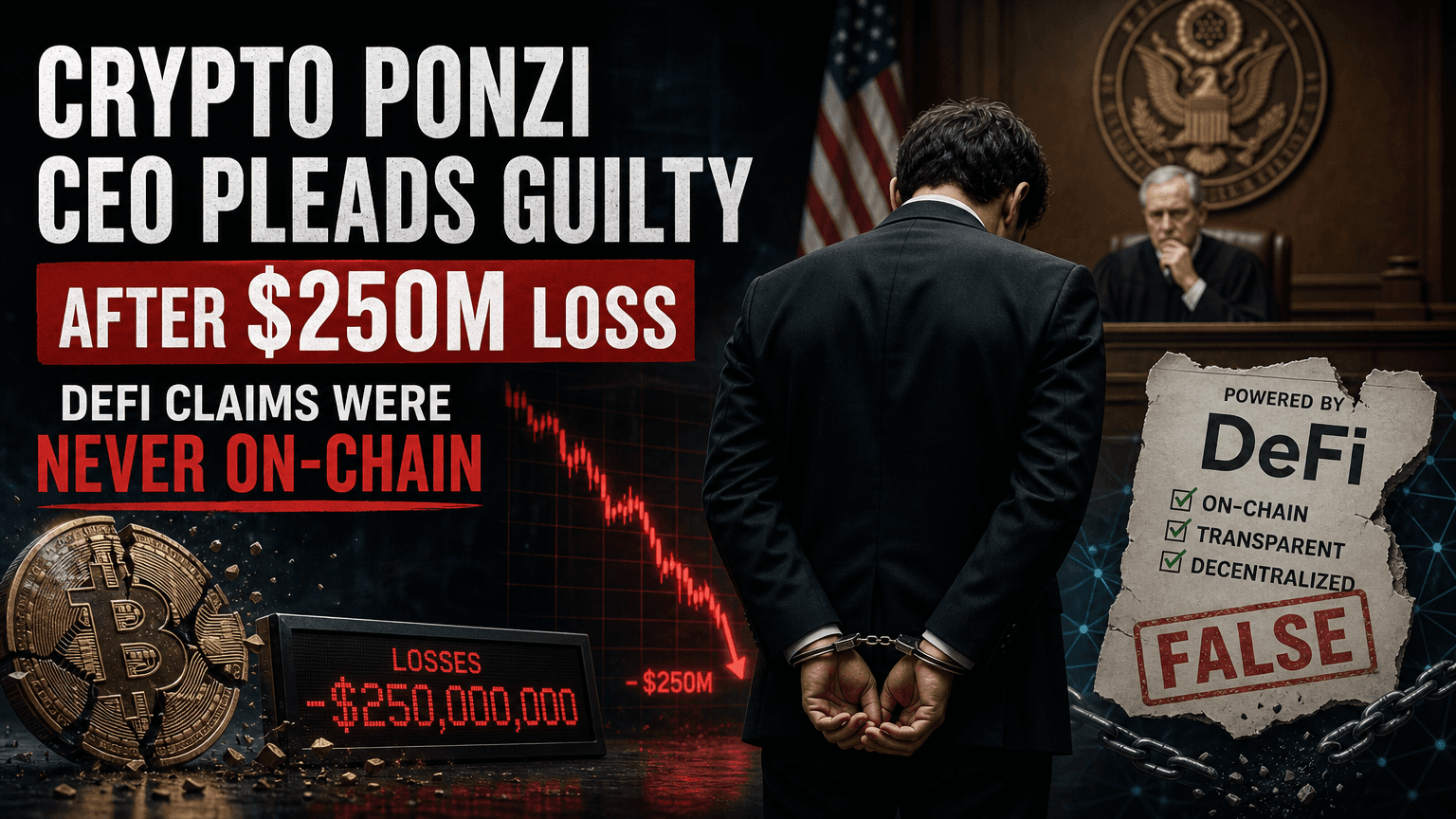
Crypto Ponzi CEO Pleads Guilty After $250M Loss: DeFi Claims Were Never On-Chain

Crypto Ponzi CEO Pleads Guilty After $250M Loss: DeFi Claims Were Never On-Chain

The Unraveling of a Crypto Ponzi Scheme: An In-Depth Examination

Christopher Alexander Delgado's recent guilty plea sheds light on one of the largest crypto Ponzi schemes in recent years. This scandal underscores how a lack of basic knowledge about decentralized finance contributed to a multibillion-dollar deception. Despite raising over $400 million from investors, only a paltry $1.5 million was ever placed into the decentralized exchange Uniswap, the purported investment vehicle.


Understanding Goliath Ventures: The Anatomy of a Ponzi Scheme

Goliath Ventures, once known as Gen-Z Venture Firm, portrayed itself as a cutting-edge DeFi operation, claiming to invest in cryptocurrency liquidity pools for lucrative returns. In reality, the firm deviated massively from its advertised operations. Investors were led to believe their capital was multiplying in Uniswap-based pools. However, an examination of blockchain records revealed minimal engagement with these exchanges.


The Mechanics of DeFi and the Illusion of Transparency

In decentralized finance, transparency is both a feature and a vulnerability. Blockchain records are public and immutable. For Uniswap, each transaction and liquidity pool operation is recorded and visible to anyone who cares to look. Yet, the complexities of interpreting these records often deter investors from verifying claims. Delgado banked on this knowledge gap, which allowed Goliath Ventures to flourish unwatched until it was too late.


Moment of Reckoning: The Legal Proceedings

Delgado's guilty plea in U.S. District Court marks a significant moment in this legal saga. Facing up to 50 years in prison, his acknowledgment of causing approximately $250 million in losses is a fraction of the broader financial disaster. The federal government has so far managed to recover a mere $366,000, highlighting the depth of the financial abyss left in Goliath's wake.


The Smoke and Mirrors: How Goliath Concealed Its Fraud

Goliath's fraudulent facade thrived by leveraging the common investor’s lack of understanding of DeFi. If any of the company's investors had looked up Goliath's public wallet addresses on a blockchain explorer, they would have seen the stark truth — only $1.5 million, a negligible fraction of the $400 million raised, was ever invested in the liquidity pools claimed to generate returns.


Complicit Enablers: Financial Institutions Under Scrutiny

Beyond Delgado's culpability, attention has turned to JPMorgan Chase and other financial entities that allegedly facilitated this fraudulent scheme. Accused of overlooking clear signs of Ponzi activity, these institutions may face severe legal repercussions. Class-action lawsuits allege JPMorgan processed hundreds of millions despite apparent red flags, raising questions about their duty of care and compliance with anti-money laundering regulations.


Deciphering the Red Flags: Identifying DeFi Fraud

Investors can avoid falling prey to similar frauds by recognizing certain warning signs: guarantees of high fixed returns, lack of transparency, and reliance on personal referrals for investments. True DeFi ventures are characterized by verifiable blockchain activity and volatile, volume-dependent returns, not fixed monthly payouts.


Asset Forfeiture and Investor Recourse

The belated realization of fraud leaves many investors with limited recovery options. While Delgado has agreed to forfeit a range of assets, the likelihood of these addressing the full extent of losses is slim. Civil actions against financial institutions involved in enabling the fraud remain a more promising avenue for restitution.


Whistleblowers and the Role of Media

The investigative work by journalist Danny de Hek was pivotal in exposing Goliath Ventures’ fraudulent activities. This case exemplifies the crucial role of journalism in financial oversight, often acting as the first line of defense in uncovering deceptive practices before any institutional action is taken.


Key Takeaways for Investors

The Goliath Ventures case serves as a stark reminder of the importance of due diligence. Prospective investments in DeFi schemes should never proceed without appropriate verification of claims through accessible blockchain records. Investors are advised to remain vigilant against schemes that promise returns far exceeding market norms and to demand transparency in all financial dealings.


Latest news