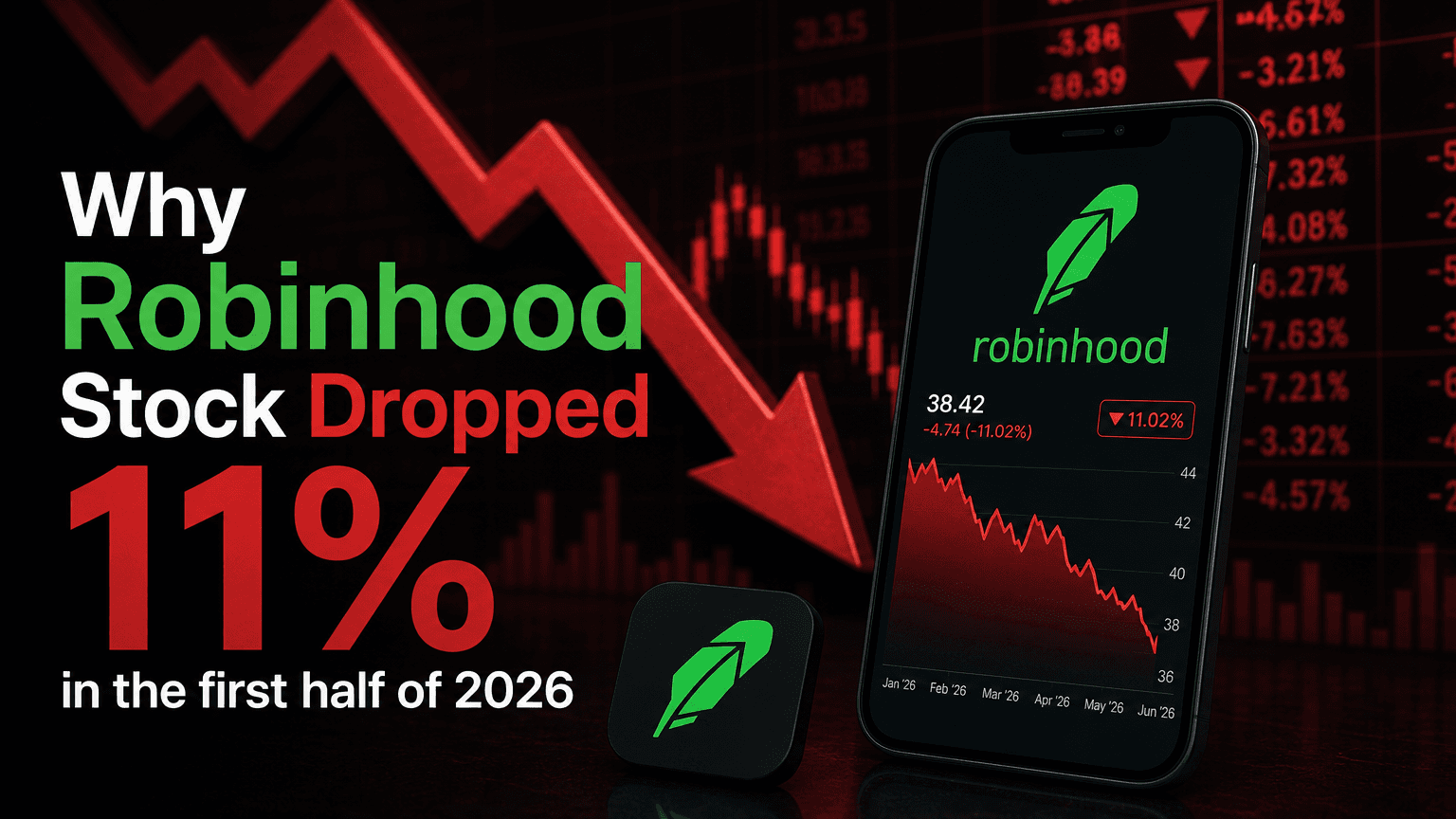
Why Robinhood Stock Dropped 11% in the first half of 2026

Why Robinhood Stock Dropped 11% in the first half of 2026

Robinhood Markets: Navigating Growth and Volatility

Robinhood Markets (HOOD +3.75%) has experienced a rollercoaster journey in 2023, typified by an 11% decline in the first half of the year, as reported by S&P Global Market Intelligence. Initially mirroring the trajectory of Bitcoin, following a drastic plunge, the stock has recently seen a recovery in its value.


More Than Cryptocurrency

Although Robinhood remains relatively small, with a trailing 12-month revenue of $4.6 billion, its influence on the markets has been substantial. The company's introduction of fee-free trades has become an industry standard, pushing other platforms to follow suit. Robinhood's penchant for fintech innovations continually places it in the spotlight, although these ventures bring mixed blessings.


The company's growth narrative has been heavily reliant on cryptocurrency trading, a factor that turned challenging with Bitcoin's decline, subsequently impacting Robinhood's growth trajectory. Furthermore, while Robinhood's Prediction Markets segment showcases its innovative edge, it also introduces an element of risk.


Nevertheless, Robinhood has made significant strides in other areas. It was among the few trading platforms selected for retail investor access during SpaceX's IPO and received approval to underwrite IPOs. By introducing traditional financial services like credit cards and bank accounts, Robinhood aims to cement its status as a major financial player, thereby stabilizing its revenue streams amid the volatility of newer ventures.


Challenges and Opportunities

Robinhood's revenue growth has been moderate following setbacks in cryptocurrency trading. The company reported a 15% year-over-year increase in revenue for the first quarter of 2026, a stark contrast to the previous year's 50% growth. This slowdown included a significant 47% decline in revenue from cryptocurrency trading. Nonetheless, the 46% growth in equities trading revenue illustrates Robinhood's capability to pivot successfully.


Positive developments were also evident in the quarter's statistics. The platform saw a 39% surge in assets and a 36% increase in Robinhood Gold subscribers, boosting the total to 4.3 million. Moreover, with the addition of half a million funded accounts and a fivefold sequential growth in banking services, Robinhood's value proposition to investors is expanding.


Priced to Buy?

The initial 11% dip in Robinhood's stock price during the first half of the year conceals its recent resurgence, with a 45% increase over the past three months. This climb illustrates renewed investor confidence, fueled by Robinhood's strategic capabilities and future prospects. The stock now trades at a P/E ratio of 55 and a price-to-sales ratio of 22, indicative of a return to premium valuation levels.


For risk-tolerant investors with a long-term investment horizon, Robinhood presents a potentially attractive option at its current pricing. However, as the price climbs, so does susceptibility to potential volatility. As always, a prudent approach is recommended, keeping in mind the balance between risk and reward while making informed investment decisions in an ever-evolving financial landscape.


Latest news